

The Lir’vyn
The Lír’vyn – The People Who Live with the Heart of the Forest

Meaning in Tehând
“Those Who Breathe with the Wilds”
or
“Children of the Living Earth”
Lír → Beast, wilderness, instinct, the living essence of nature
vyn → People, community, togetherness
"Lír’vyn thar syl’voryn mir’ithar."
→ “The Lír’vyn — the people who live with the heart of the forest.”

Chibi by hiyukii
Die Lir’vyn are a hybrid people, combining both animal and human traits: pointed, agile ears, softly glowing eyes, lightly furred arms, and sometimes a bushy tail. Many remain deeply connected to their animal instincts, while others have adopted partially human characteristics — in expressions, posture, or physical traits such as human skin instead of fur.
They value community, the simple joys of life, and a deep connection to nature — a people who uniquely blend animal instincts, intelligence, and magic, found throughout all the kingdoms of Ananthara.
Mythen & Philosophie:
Their name says it all: Lír – the living essence of nature, vyn – the people. An old saying goes:
"Those who breathe with the wilds."
They see themselves as guardians of the forest, children of the earth, believing that all life is interconnected.
Language & Communication:
They primarily speak the ancient dragon language called Tehând and use gestures or animal sounds to enhance their communication.
Relationship with the Environment:
For the Lír’vyn, nature is sacred. They tend the forests, maintain the balance between hunting and life, and avoid destruction whenever possible. Strangers who threaten the natural world are met with suspicion, while peaceful visitors are welcomed warmly.
Origin: The Guardian of Dreams
When the goddess Faon’lin died in the arms of her beloved, she left one final gift through the magic that escaped into the world — the gift of new life.
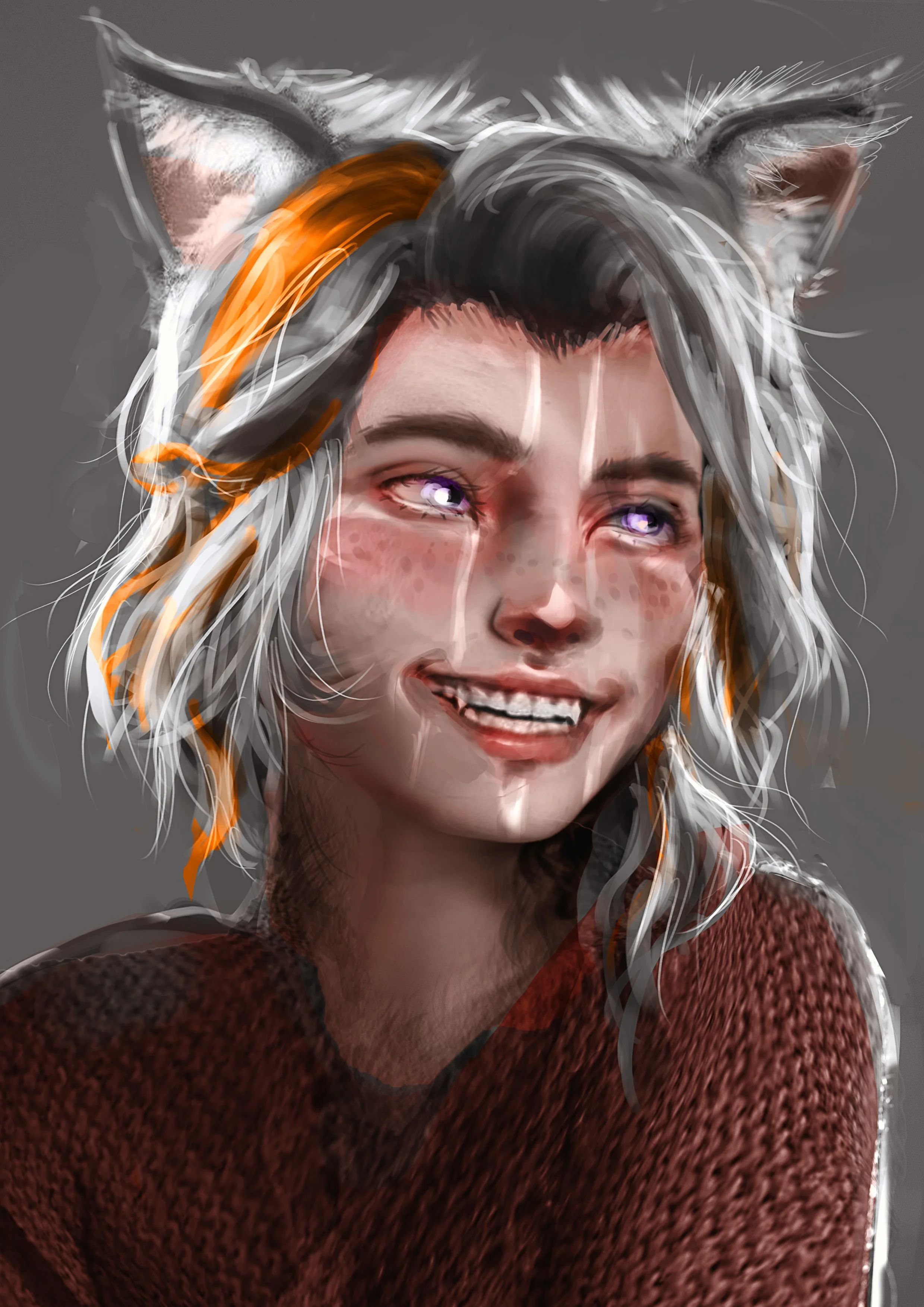
N’hari, the Lightborn.
From Faonlin’s sacrifice, a girl was born unlike either the Alvae or the Siliäe. With snow-white hair, small cat-like ears, and a tail, she was a unique blend of animal and human traits.
Fenrel, Faonlin’s beloved, took N’hari in and raised her as his own child — though her spirited nature and free soul often reminded him of his late wife. Through N’hari, he understood Faonlin’s final wish and used the remaining dragon scale to create more of her people.
While most of her people retained their animal traits, N’hari reflected more of her mother’s human qualities — a soft, expressive face, slender limbs combining agility with grace, and eyes full of intelligence and compassion. This was the direct result of Faonlin’s sacrifice: her magic was deeply woven into N’hari, making her form a stronger embodiment of the divine blend of animal and human.
N’hari was entrusted with the task of guiding her people along the four paths of Ithariel, fostering harmony and growth in the world, and passing on the teachings of the Wyldheart — just as Faonlin had once done.
Thus, N’hari became the first Lír’vyn, guardian of Faonlin’s dream and bringer of peace.
Age and Lifespan
The Lír’vyn age more slowly than humans. Their lifespan varies depending on their animal traits, cultural lifestyle, and spiritual connection:
Animal Influences: Their hybrid features directly affect longevity. Lír’vyn with long-lived animal traits, such as wolves or foxes, often live 100–120 years.
Cultural Lifestyle: Living in harmony with nature, practicing mindful rituals, maintaining a healthy diet, and fostering strong communities support both body and mind, enhancing longevity.
Spiritual Connection: Especially the Elunari line, infused with the dragon blood of the goddess, ages almost not at all and retains a youthful appearance for centuries. All Lír’vyn merge with forests, plants, and animals after death, allowing their influence to endure beyond the physical world.
Comparison to Humans:
Average Lír’vyn lifespan: ~110 years
Average human lifespan: ~80 years
One Lír’vyn year ≈ 1.38 human years
Example:
A 28-year-old human would be approximately 39 Lír’vyn years (28 × 1.38 ≈ 39 Lír’vyn years).
Community & Culture:
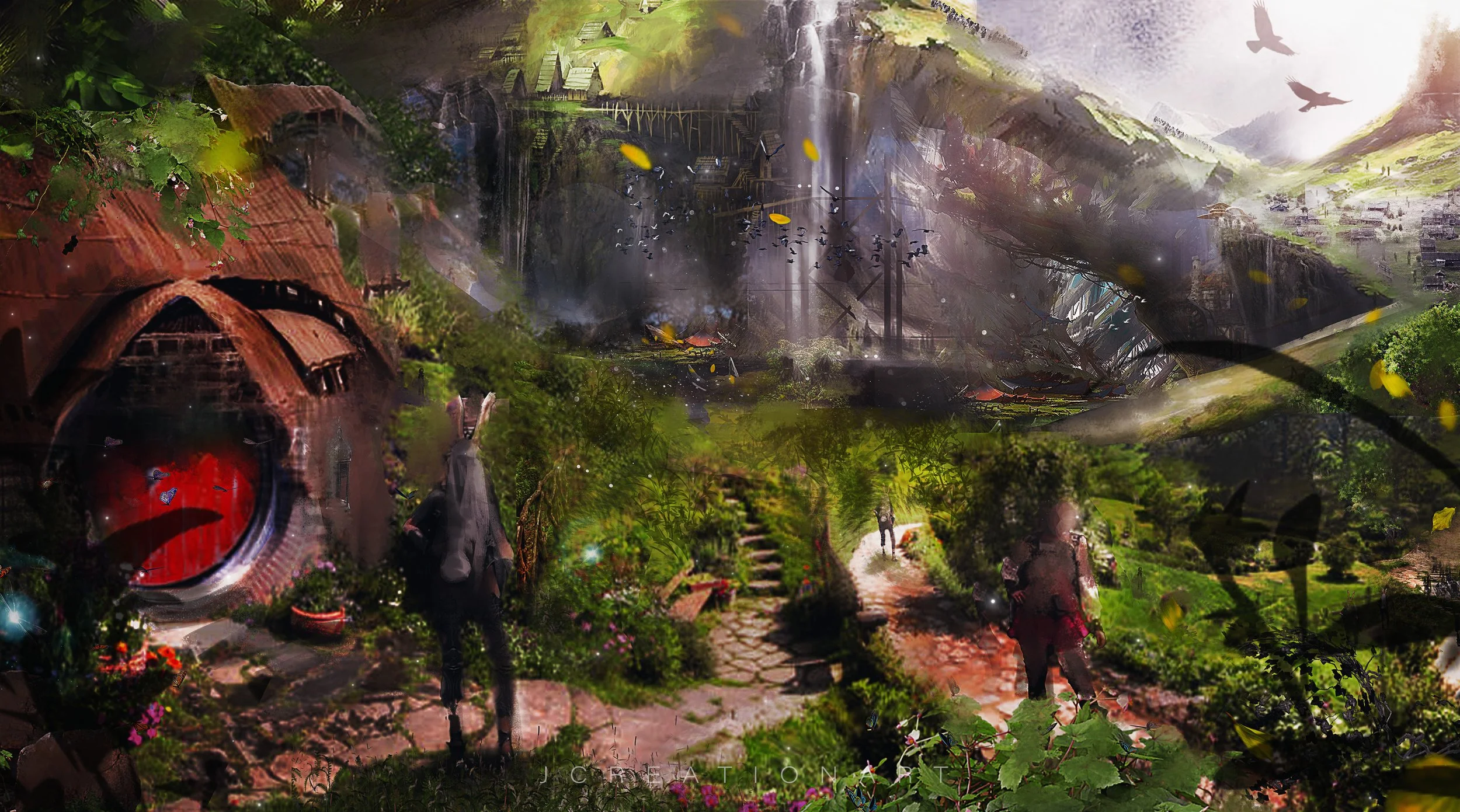
Capital City of Kingdom Bay’r Aeloria
Habitats and Settlements
The Lír’vyn live in small tribes, with dwellings perfectly adapted to their instincts and way of life. Their homes are primarily made of wood, clay, and plant materials, blending harmoniously with the surrounding environment—hills, forests, and meadows are cleverly incorporated.
Some tribes prefer underground structures or natural caves, while others build open huts in trees or on elevated terrain. Each home reflects the personality of its tribe: sturdy and protective, hidden and mysterious, or airy and expansive.
THE TRIBES
-
Etymology: Thar (strength / will) + -il (state / bearer)
Meaning: “Those who protect through strength”
Symbolism: Physical power, loyalty, pack spirit
Wolves 🐺 → Symbolize hunting, family, instinct
Bears 🐻 → Represent protection, strength, primal magic
Lions / Big Cats 🦁 → Dignity and territorial authority
Wild dogs or jackals → Hunters and guardians of the wilderness
Habitat and Architecture:
Tharil construct robust, protected huts using wood, clay, and animal hides, often arranged in a pack-like structure that emphasizes safety and proximity to hunting grounds.Natural Talents:
Their abilities are rooted in instinct, hunting prowess, and inner discipline, making them formidable guardians of their territory and their communities. -
Etymology: Na’thar → “Twilight between worlds”
Meaning: “Those who see in the dark”
Symbolism: Wisdom, stealth, spiritual insight
Owls 🦉 → Night seers, keepers of secrets
Bats 🦇 → Silent hunters, symbols of transition
Panthers / Lynxes 🐈⬛ → Graceful creatures of shadow
Night snakes 🐍 → Mystical, nocturnal beings
Night ravens → Connection to prophecy and death
Habitat and Architecture:
Nathar favor concealed and skillfully hidden shelters—small tree huts, rocky crevices, or winding caves—perfect for nocturnal activity and scouting missions.Natural Talents:
They are silent, observant, and skilled in illusions, making them exceptional scouts, seers, and guardians of ancient secrets. -
Etymology: Lyr → “Wilderness / Instinct / Natural force”
Meaning: “Children of the Wild”
Symbolism: Freedom, nature, untamed spirit
Deer 🦌 → Purity and connection to the Wyldheart
Foxes 🦊 → Cunning and adaptability
Wild horses 🐎 → Untamed freedom
Hares or fawns 🐇🦌 → Gentleness and survival instinct
Nature spirits in animal form (fauns, dryads)
Habitat and Architecture:
The Lyr live in open, harmonious dwellings integrated into the landscape—tree platforms, small huts made of branches and plants, often with direct access to meadows and rivers.Natural Talents:
Instinctive, healing, growth-oriented. They live in harmony with nature, avoid conflict, and teach balance. -
Etymology: Aether (sky, wind, light) + -i (plural/people)
Meaning: “Those Born from the Sky”
Symbolism: Freedom, vision, exaltation
Role and Identity:
Messengers between heaven and earth, guardians of the ancient secrets of wind and stars.Animal Symbols:
Eagles 🦅 → Power, foresight, divine order
Hawks / Falcons 🦅 → Precision, speed
Harpies 🕊️ → Ancient guardians of the skies, noble yet wild
Swans / Herons 🦢 → Spiritual purity and grace
Griffins → Connection between heaven and earth
Habitat and Architecture:
The Aetheri build airy structures on hills or among treetops, with open terraces and panoramic views, reflecting their nature as sky dwellers.Natural Talents:
Their strengths lie in foresight, precision, and spiritual guidance—they perceive what others cannot. -
Etymology:
Syl → “Song” or “Chant”
Varyn → “Wave” or “Moving Water”
Meaning: “The Singers of the Ocean” – a name that reflects the melodic, almost hypnotic nature of this aquatic people.
Culture & Abilities:
The Syl’varin are sea-dwellers of all kinds, primarily sirens, whose songs activate the healing powers of the Mir’valis River.Legends say that their singing goes beyond healing: in the depths of the Sacred Wylds and amidst the powerful magic there, it becomes a source of inner truth, revealing a being’s truest self and deepest hidden secrets.
-
Bonus: The Elunari – The Divinely Touched
The Elunari carry the essence of Faonlin in their veins, granting them practically eternal youth and often a distinct magical aura or presence. Even Aetheri, who resemble the primal type, can inherit this divine essence, though their appearance generally remains more animalistic.
Appearance: Their skin resembles porcelain, eyes shimmer violet like orchids due to the divine blood's magic.
Blood: Deep blue, syrup-like, threaded with silver particles of leyline dust that sparkle like tiny stars. Under light, it glows from within, and when magic is activated, the pulsing blue flows visibly beneath their skin—a tangible sign of their inner power.
Conflicts & the Coveted Elunari Blood
The unique properties of Elunari blood make them prime targets. The Voltari Cult and followers of Aeternus, the mysterious god of infinity, seek them, believing their blood can enhance magical power, grant extraordinary abilities, or even provide immortality.
Special Properties:
Temporary Enhancement: Blood boosts magical strength, physical abilities, and can trigger visions often seen as divine inspiration.
Addictive Potential:
Magical Dependence: Regular consumption creates reliance on this external source. Without it, spells may fail, weaken, or act uncontrollably—magic can become “corrupted.”
Psychological Effects: Withdrawal may lead to hallucinations, visions, or emotional instability, disconnecting the user from reality.
Physical Strain: Repeated consumption heavily taxes the body, causing palpitations, cramps, weakness, or internal damage.
Overall Risk: The combination of unstable magic, mental strain, and physical overload can be fatal. Even experienced mages risk losing control over mind and powers.
For these reasons, Elunari blood is traded on Ananthara’s black market as a highly prized substance, known as:
Syl → Light, Glimmer
Those who drink it can temporarily unleash incredible power, but the effect is unstable and dangerous, placing both body and mind under extreme strain.
Conflicts and the Coveted Blood of the Elunari
The Elunari's unique blood makes them prime targets. The Voltari cult and followers of Aeternus, the mysterious god of Infinity, relentlessly pursue them. They believe that Elunari blood grants extraordinary powers, temporarily enhances magical abilities, or in some cases, even offers a path to immortality.
Special Properties
Temporary Enhancement: The blood can amplify magical abilities, physical strength, and enhance visions, which many interpret as divine inspiration.
Addictive Potential: Regular consumption creates dependency. Without it, spells may fail, weaken, or erupt uncontrollably—sometimes resulting in corrupted magic.
Psychological Side Effects: Withdrawal can lead to hallucinations, visions, or emotional instability, disconnecting the user from reality.
Physical Strain: Repeated use puts immense stress on the body—racing heart, cramps, fatigue, or internal damage are possible.
Overall Risk: The combination of unstable magic, mental confusion, and physical strain can be fatal. Even experienced mages risk losing control over both mind and power.
Because of its potency, Elunari blood is traded on the black market in Ananthara as a high-risk substance called Syl (Light, Glimmer). Those who consume it gain incredible but unstable powers, putting both body and mind under extreme strain.
Community and Daily Life
In Aeloria, the city uniting all tribes, each clan maintains its own territory reflecting its traditions and style. Markets, festival grounds, and meeting places connect the city, yet friction is inevitable: pack instincts, hunting habits, and territorial disputes mean harmony is not always guaranteed.
Still, the Lír’vyn manage to shape Aeloria into a place of coexistence, trade, and cultural exchange, respecting each tribe’s individuality.
Relations with Other Races
The Lír’vyn are viewed with a mixture of fascination and suspicion. Their animal traits and deep connection to nature make them exotic, while their rare blood and magical potential provoke envy and greed.
Prejudices: Some see the Lír’vyn as unpredictable or dangerous, acting on instinct rather than human standards. Particularly the Elunari and Aetheri, with their divine blood, are often considered “too powerful” or “dangerous.”
Hostilities: Cults like the Voltari and other magic-seekers hunt the Lír’vyn for their blood.
Trade Relations: Lír’vyn exchange rare herbs, magical plants, and skilled craftsmanship for tools, food, or knowledge. Transactions rely on mutual respect, as disrespect can quickly escalate into conflict.
Neutrality: Most Lír’vyn prefer to stay out of political power struggles. They protect their lands, assist in times of need, and ensure outsiders respect their rituals and way of life.

The Caves of Aeloria
Rituals and Festivals – Lir’fael’thaen
Lir’fael’thaen – Festival of Awakening and the Connected
Location: Aeloria, Capital of Bay’r
Duration: Months Nûr’ael, Fael’raen, Ael’vyn
Meaning: “The Blossoming of the Connected” – Celebrating the end of winter, the arrival of spring, the new year, and the Festival of Lovers
Rituals and Traditions
New Year Ceremony (Month Ael)
Lir’vyn pray to the goddess Faon’lin at the Sacred Tree in Aeloria’s center.
Meditation in a circle around the tree to honor Faon’lin and connect with her gifts and magic for the new year.
Festival of Lovers (14th Fael’raen)
Celebrates not only lovers but also family, friends, and community bonds.
The “Light of the Heart”: A magical flower grows around the Tree of Life and blooms only when true love or deep connection exists between two souls.
Marriage ceremonies: The blossoms are planted together in the couple’s home; if love ends or one dies, the flower wilts.
Vows: Ribbons inscribed with promises are tied, blessed, and carried as magical tokens.
Spring Awakening (Month Vyn)
Farewell to winter, celebration of nature, renewal, and harmony.
Flowers from the Life Tree symbolize community, life cycles, love, and growth.
Special Customs
Newborns: Receive a blossom that merges with their life energy.
Friends & Family: Handmade objects (gems, symbols) resonate with relationships and carry protective magic.
Magical Flowers: React to emotions, proximity, and life events, representing love, life, and communal harmony.
Jetzt weiterlesen

The Dur’kaen are not only skilled smiths, researchers, and shamans – they are the guardians of dragonblood, with their bodies, skin, and magic directly connected to the mountains and magical mineral flows. From the Children’s Fire Trial to the ancient rituals of the Call of the Mountain, they craft weapons, structures, and artifacts that preserve the legacy of the dragons. Discover how their flame, rituals, and knowledge shape the world of Ananthara.